


New Zealand – Explore the timeless Study Destination
✈️ Quick Facts
New Zealand has eight state-funded universities, 16 Institutes of Technology and Polytechnics (ITPs), and about 550 Private Training Establishments (PTEs), which include English language schools.
Why International Students Choose New Zealand for Higher Studies?
New Zealand’s higher education system offers a wide range of programs and education providers to choose from, in any region of the country.
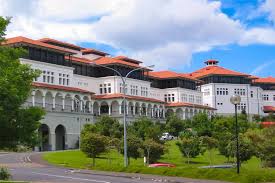 NZ universities offer high academic standards with many programs being research-intensive, particularly in health sciences, engineering, agriculture, and environmental studies.
Universities in New Zealand are generally very well-regarded internationally.
As of the 2025 QS World University Rankings, the top universities in New Zealand are:
NZ universities offer high academic standards with many programs being research-intensive, particularly in health sciences, engineering, agriculture, and environmental studies.
Universities in New Zealand are generally very well-regarded internationally.
As of the 2025 QS World University Rankings, the top universities in New Zealand are:
 Accommodation costs for flats and houses can vary widely across the country. There are several possible options for renting during a period of study in New Zealand. You could stay in student residence halls ($100-$700 per week), a home stay ($100-$370 for a room per week), or a flat ($200-$600 on average per week).
The healthcare system in New Zealand is commendable –You must be covered by medical and travel insurance policies while you’re studying in New Zealand, from the point at which you enroll, until your visa expires.
Health insurance is affordable even for international students – for example, health and travel insurance costs $350 per semester, but this depends on your health profile and where you choose to study.
On average, you will pay between $25 and $60 to see a doctor, and hospital costs are paid for by the state, while prescriptions are $5.
Other essential student costs
Accommodation costs for flats and houses can vary widely across the country. There are several possible options for renting during a period of study in New Zealand. You could stay in student residence halls ($100-$700 per week), a home stay ($100-$370 for a room per week), or a flat ($200-$600 on average per week).
The healthcare system in New Zealand is commendable –You must be covered by medical and travel insurance policies while you’re studying in New Zealand, from the point at which you enroll, until your visa expires.
Health insurance is affordable even for international students – for example, health and travel insurance costs $350 per semester, but this depends on your health profile and where you choose to study.
On average, you will pay between $25 and $60 to see a doctor, and hospital costs are paid for by the state, while prescriptions are $5.
Other essential student costs
 Full-time international undergraduate students in New Zealand are usually permitted to work on a part-time basis for up to 20 hours per week in term time and full-time in the holidays, while Master’s by Research and PhD students can work longer hours. Many of these students work in their research-related fields.
In some cases, you may need to work as part of your studies (to complete a short internship). To do this, you need permission from Immigration New Zealand, and it will be a condition of your visa.
This does not affect any other work rights you may have. For example, your visa may allow you to work 20 hours per week and also allow you to complete your work as part of your studies.
The adult minimum wage in New Zealand is $23.15 per hour.
However, it’s always important to thoroughly check your visa conditions before taking on any paid work.
Post-Study Work Visa
You can apply for this visa if you hold a student visa and have recently finished your studies in New Zealand. It allows you to stay and work here for up to 3 years, depending on what qualification you studied.
With this visa, you can
Full-time international undergraduate students in New Zealand are usually permitted to work on a part-time basis for up to 20 hours per week in term time and full-time in the holidays, while Master’s by Research and PhD students can work longer hours. Many of these students work in their research-related fields.
In some cases, you may need to work as part of your studies (to complete a short internship). To do this, you need permission from Immigration New Zealand, and it will be a condition of your visa.
This does not affect any other work rights you may have. For example, your visa may allow you to work 20 hours per week and also allow you to complete your work as part of your studies.
The adult minimum wage in New Zealand is $23.15 per hour.
However, it’s always important to thoroughly check your visa conditions before taking on any paid work.
Post-Study Work Visa
You can apply for this visa if you hold a student visa and have recently finished your studies in New Zealand. It allows you to stay and work here for up to 3 years, depending on what qualification you studied.
With this visa, you can
 New Zealand offers a wide range of career opportunities to new graduates. The country has high degree-completion and employment rates, and low rates of underemployment.
New Zealand’s biggest industry by far is agriculture, but there is also a thriving service industry, a strong focus on international trade, and growing green energy and tech sectors, providing graduates with a range of opportunities.
Healthcare remains a priority, especially as the country addresses an aging population, with roles for nurses, aged-care workers, and allied health professionals in high demand. This sector alone has seen substantial growth, with significant government support for ongoing recruitment and training.
Technology and engineering fields are also expanding, particularly in areas such as IT, cybersecurity, and renewable energy engineering. Additionally, IT roles, including software development and data analysis, are essential as organizations advance digital transformation initiatives.
Education is experiencing a shortage of qualified teachers, prompting government investment in training programs to fill roles in primary and secondary education. This shortage offers opportunities for educators, especially in regional areas where the need is most pronounced.
New Zealand consistently ranks high in global quality of life rankings. With its beautiful natural landscapes, friendly and welcoming people, and excellent healthcare and education systems, it is one of the best Study destinations for International Students.
New Zealand offers a wide range of career opportunities to new graduates. The country has high degree-completion and employment rates, and low rates of underemployment.
New Zealand’s biggest industry by far is agriculture, but there is also a thriving service industry, a strong focus on international trade, and growing green energy and tech sectors, providing graduates with a range of opportunities.
Healthcare remains a priority, especially as the country addresses an aging population, with roles for nurses, aged-care workers, and allied health professionals in high demand. This sector alone has seen substantial growth, with significant government support for ongoing recruitment and training.
Technology and engineering fields are also expanding, particularly in areas such as IT, cybersecurity, and renewable energy engineering. Additionally, IT roles, including software development and data analysis, are essential as organizations advance digital transformation initiatives.
Education is experiencing a shortage of qualified teachers, prompting government investment in training programs to fill roles in primary and secondary education. This shortage offers opportunities for educators, especially in regional areas where the need is most pronounced.
New Zealand consistently ranks high in global quality of life rankings. With its beautiful natural landscapes, friendly and welcoming people, and excellent healthcare and education systems, it is one of the best Study destinations for International Students.
- Capital: Wellington
- Main cities for students: Auckland, Christchurch, Wellington, Dunedin
- Student visa work rights: Up to 20 hours/week during term & full-time in holidays
- Time zone: GMT+12 (NZST)
| Level 7 | Diploma Bachelor’s Degree Graduate Certificate Graduate Diploma |
| Level 8 | Bachelor Honours Degree Postgraduate Certificate Postgraduate Diploma |
| Level 9 | Master’s Degree |
| Level 10 | Doctoral Degree |
- High-Quality Education:
- Wide variety of courses with a focus on innovation:
- Affordable tuition and living expenses:
- Work while you study:
- Stay back option:
- Job Opportunities in New Zealand:
- Completion of an equivalent of year 13.
- Minimum requirement of 50-60% or above for admission.
- English Language proficiency test such as IELTS.
- Minimum score of 50-60% in undergraduate studies.
- GMAT or GRE scores are required for management studies.
- Some universities may consider work experience or internships.
- English proficiency must be demonstrated through tests like IELTS.
- Health Sciences & Nursing
- Information Technology & Computer Science
- Strong emphasis on innovation and practical skills
- Universities offer programs in software development, cyber security, AI, and data science
- Business and Management
- Specializations: International business, finance, entrepreneurship, supply chain management.
- Engineering
- Civil, Mechanical, Electrical, and Software Engineering are in demand
- Hospitality and Tourism Management
- Given NZ’s thriving tourism industry, programs are hands-on and internationally recognized
- Education and Teaching
- Programs in early childhood, primary, and secondary education
- Teaching is a skill in demand in NZ, especially in rural areas
- Agriculture & Environmental Sciences
- NZ is a global leader in sustainable farming and environmental management
NZ universities offer high academic standards with many programs being research-intensive, particularly in health sciences, engineering, agriculture, and environmental studies.
Universities in New Zealand are generally very well-regarded internationally.
As of the 2025 QS World University Rankings, the top universities in New Zealand are:
- University of Auckland – Ranked 65th globally, it is New Zealand’s highest-ranked institution. The university excels in sustainability, securing 17th place worldwide in the QS Sustainability Rankings 2025.
- University of Otago – Ranked 214th globally, it is renowned for its programs in medicine, health sciences, and data science.
- University of Waikato – Ranked 235th globally, it offers strong programs in software engineering, management, and biochemistry.
- Massey University – Ranked 239th globally, it is well-regarded for its health science and veterinary programs.
- Victoria University of Wellington – Ranked 244th globally, it is known for its law, public policy, arts, and life sciences programs.
- University of Canterbury – Ranked 261st globally, it offers strong programs in engineering, digital arts, and mathematics.
- Lincoln University – Ranked 371st globally, it specializes in agribusiness and environmental studies.
- Auckland University of Technology (AUT) – Ranked 412th globally, it is known for its programs in art & design, business, and computer science.
- University of Auckland: Applications close on 1 November 2024.
- University of Otago: Applications close on 15 November 2024.
- Massey University: Applications close on 31 October 2024.
- Victoria University of Wellington: Applications close on 1 December 2024.
- University of Waikato: Applications close on 31 January 2025.
- University of Canterbury: Applications close on 8 December 2024.
- Lincoln University: Applications close on 30 November 2024.
- Auckland University of Technology (AUT): Applications close on 30 November 2024.
July Intake (Semester 2, 2025)
- University of Auckland: Applications close on 4 July 2025.
- University of Otago: Applications close on 30 April 2025.
- Victoria University of Wellington: Applications close on 1 May 2025.
- University of Canterbury: Applications close on 1 May 2025.
- Massey University: Applications close on 1 May 2025 (for most courses); MBA applications close on 20 May 2025.
- University of Waikato: Applications close on 31 May 2025.
- Lincoln University: Applications close in June 2025.
- Auckland University of Technology (AUT): Applications close on 30 April 2025.
- Undergraduate Programs: Range from NZD 25,000 to NZD 45,000 per year, depending on the field. Specialized fields like medicine and veterinary science are often costlier.
- Postgraduate Programs: Typically cost between NZD 20,000 and NZD 37,000 per year, with some subjects incurring higher fees.
- PhD Programs: PhD tuition fees are the same for international and domestic students, averaging NZD 6,500 to NZD 9,000 per year.
- MBA Programs: Average costs are higher, typically between NZD 31,000 and NZD 50,000 annually
Accommodation costs for flats and houses can vary widely across the country. There are several possible options for renting during a period of study in New Zealand. You could stay in student residence halls ($100-$700 per week), a home stay ($100-$370 for a room per week), or a flat ($200-$600 on average per week).
The healthcare system in New Zealand is commendable –You must be covered by medical and travel insurance policies while you’re studying in New Zealand, from the point at which you enroll, until your visa expires.
Health insurance is affordable even for international students – for example, health and travel insurance costs $350 per semester, but this depends on your health profile and where you choose to study.
On average, you will pay between $25 and $60 to see a doctor, and hospital costs are paid for by the state, while prescriptions are $5.
Other essential student costs
- The average monthly phone bill is $20
- The internet plan is $70 per month (split between the tenants of the flat)
- Utilities (gas, electricity, and water) are $100.
- Books and other academic supplies per year is $300
Full-time international undergraduate students in New Zealand are usually permitted to work on a part-time basis for up to 20 hours per week in term time and full-time in the holidays, while Master’s by Research and PhD students can work longer hours. Many of these students work in their research-related fields.
In some cases, you may need to work as part of your studies (to complete a short internship). To do this, you need permission from Immigration New Zealand, and it will be a condition of your visa.
This does not affect any other work rights you may have. For example, your visa may allow you to work 20 hours per week and also allow you to complete your work as part of your studies.
The adult minimum wage in New Zealand is $23.15 per hour.
However, it’s always important to thoroughly check your visa conditions before taking on any paid work.
Post-Study Work Visa
You can apply for this visa if you hold a student visa and have recently finished your studies in New Zealand. It allows you to stay and work here for up to 3 years, depending on what qualification you studied.
With this visa, you can
- Stay and work for 3 years, depending on your level of study and how long you studied in New Zealand.
- Work for any employer in any job if you have a degree level 7 or above qualification, and must have studied full-time for at least 30 weeks in New Zealand.
- Your qualification must also be on the list of Qualifications Eligible for a Post Study Work Visa.
New Zealand offers a wide range of career opportunities to new graduates. The country has high degree-completion and employment rates, and low rates of underemployment.
New Zealand’s biggest industry by far is agriculture, but there is also a thriving service industry, a strong focus on international trade, and growing green energy and tech sectors, providing graduates with a range of opportunities.
Healthcare remains a priority, especially as the country addresses an aging population, with roles for nurses, aged-care workers, and allied health professionals in high demand. This sector alone has seen substantial growth, with significant government support for ongoing recruitment and training.
Technology and engineering fields are also expanding, particularly in areas such as IT, cybersecurity, and renewable energy engineering. Additionally, IT roles, including software development and data analysis, are essential as organizations advance digital transformation initiatives.
Education is experiencing a shortage of qualified teachers, prompting government investment in training programs to fill roles in primary and secondary education. This shortage offers opportunities for educators, especially in regional areas where the need is most pronounced.
New Zealand consistently ranks high in global quality of life rankings. With its beautiful natural landscapes, friendly and welcoming people, and excellent healthcare and education systems, it is one of the best Study destinations for International Students.
About the Author Mrs. Debie Avilaa Westcott Founder & Director, THE IMMACULATE Mrs. Debie Avilaa Westcott is the Founder and Director of THE IMMACULATE, Chennai’s leading institute for IELTS training and study abroad guidance. With over two decades of experience in education and international admissions, she has helped thousands of students achieve their global dreams through expert coaching and mentorship.